By: Guglielmo Triscari
This piece argues that as the United States, once a primary architect of international norms, increasingly adopts an antagonistic stance toward the International Criminal Court (ICC), the durability of the 21st-century definition of justice reaches a critical existential reckoning. This approach risks establishing a “new normal” where the global legal order faces a historic confrontation between legal universalism and geopolitical dominance.
Amidst this friction, the European Union has emerged as the Court’s primary defender, attempting to bridge the gap between legal ideals and geopolitical reality. By analyzing the EU’s deployment of the Blocking Statute to shield the ICC’s independence, we examine whether the rule of law as an impartial global standard can survive in an era where it is increasingly eclipsed by the discretion of dominant powers.
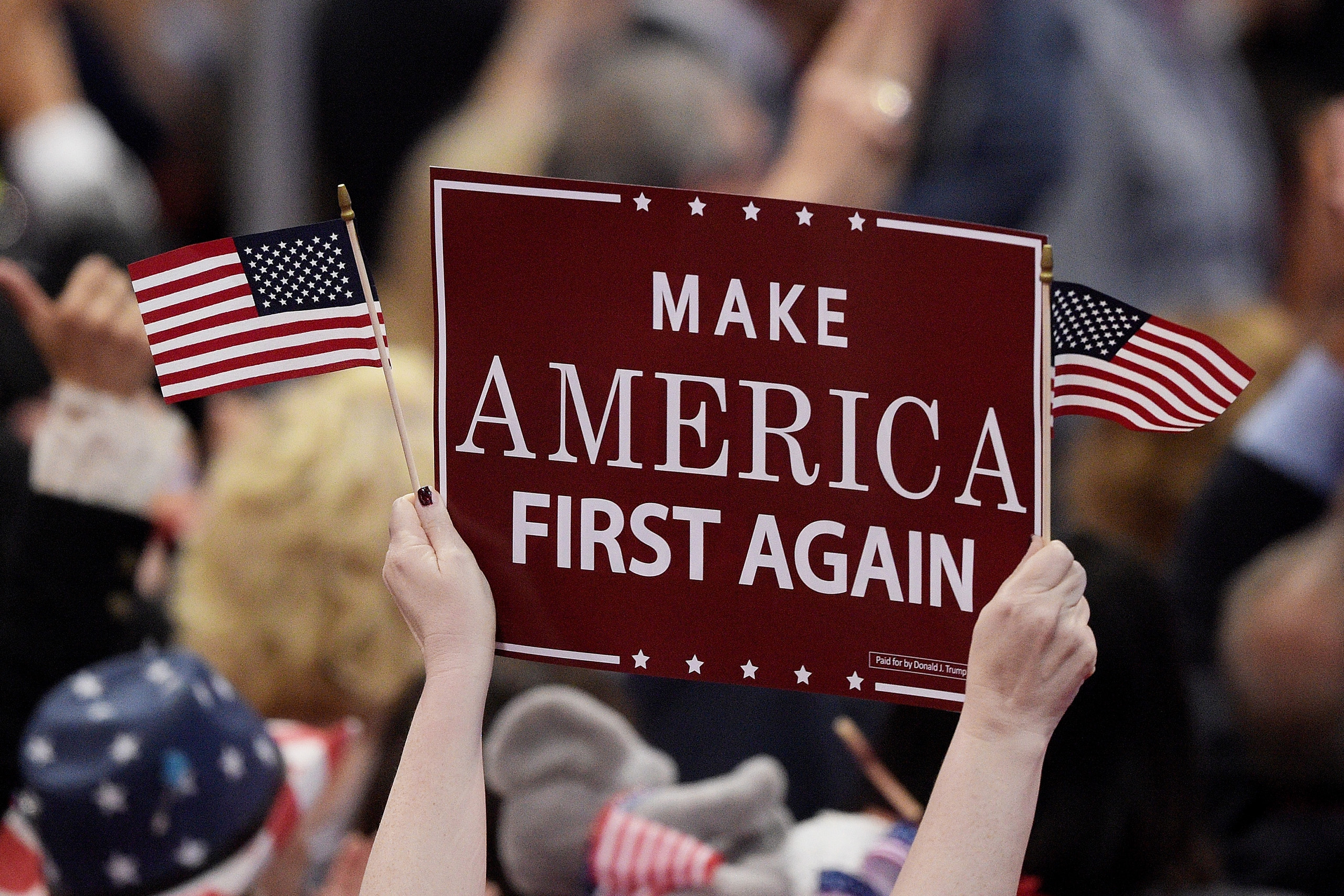
The escalating rift between Washington and The Hague is not merely a diplomatic disagreement; it is a fundamental dismantling of international institutions under the “America First” doctrine. Although the United States has consistently endorsed the language of accountability and human rights, it has categorically rejected the Court’s jurisdiction over its own citizens, invoking a doctrine of exceptionalism grounded in its constitutional sovereignty, military responsibility, and strategic autonomy.
The position of the United States vis-à-vis the Court shapes the environment in which the EU–ICC relationship operates. In this scenario the EU now finds itself navigating a precarious middle ground, forced to reconcile its foundational commitment to the rule of law with the strategic necessity of the transatlantic alliance.
United States policy toward the International Criminal Court (ICC) has historically oscillated between cautious cooperation and active opposition. Although the Clinton administration signed the Rome Statute in 2000, it was never submitted for Senate ratification. The subsequent Bush administration famously “unsigned” the treaty, and passed the American Service-Members’ Protection Act (ASPA)—derisively known as the “Hague Invasion Act”—which authorized “all means necessary” to release U.S. personnel detained by the Court.
Following the Obama years, characterized by a pragmatic observer role, relations deteriorated sharply under the first Trump administration. In 2020, Executive Order 13928 authorized sanctions against ICC staff in response to investigations into U.S. conduct in Afghanistan. This trend toward confrontation intensified in 2025. Following the ICC’s issuance of arrest warrants for Israeli leadership, the U.S. Department of State imposed sanctions on August 20, 2025, specifically targeting high-ranking officials, including Judges Nicolas Guillou and Kimberly Prost. These measures represent more than a policy disagreement; they are a direct assault on judicial independence and the principle of global accountability.
The crux of the U.S. position lies in a tenet of judicial sovereignty. Washington argues that the U.S. Constitution prevents the trial of its citizens by any court not established under its own sovereign authority. While the U.S. has integrated war crimes and genocide into its military and domestic codes, it rejects external scrutiny as a potential political tool used to limit its operational leadership.
This autonomous approach was starkly illustrated on January 3, 2026, when U.S. authorities arrested Venezuelan President Nicolás Maduro. Executed without an ICC mandate, the action operated entirely outside the collective treaty-based order. The implication is profound: when a superpower bypasses established courts, it shifts the global paradigm from the “rule of law” toward one defined by “the rule of the strongest.”
Ultimately, this reinforces the perception of the U.S. as a kinetic enforcer that treats international law as discretionary. In this landscape, accountability is no longer a universal mandate, but is often inversely proportional to power.
For the European Union, U.S. exceptionalism triggers a two-fold crisis: it undermines the ICC’s global authority—compounded by the non-participation of Russia and China—while simultaneously challenging the EU’s ability to project independent geopolitical influence.
Nevertheless, the EU has historically been the ICC’s most stalwart defender. Faced with past U.S. pressure to sign “Article 98 agreements“—bilateral immunity deals designed to exempt Americans from prosecution—the EU moved toward deeper integration. The Council Common Position 2003/444/CFSP (updating the 2001 position) prohibited Member States from entering into agreements that would undermine the integrity of the Rome Statute.
In legal terms, the principal defensive instrument available to the EU is Regulation (EC) No 2271/96, otherwise known as the Blocking Statute. Practically, it functions by prohibiting EU operators—including citizens, residents, and corporations—from complying with specified extraterritorial sanctions. In practice it can be used to protect the ICC by providing a “clawback” mechanism: under Article 6, sanctioned ICC officials who are EU nationals or residents can sue in European courts to recover damages caused by the application of U.S. measures. Furthermore, it forbids European banks from freezing the assets of these officials. By nullifying the domestic effect of foreign judgments, the EU ensures that U.S. coercive power stops at the Union’s borders, effectively insulating the Court’s judicial staff from economic warfare.
As major powers increasingly bypass the Rome Statute, the Court’s survival depends on Brussels’ ability to convert “firm rhetorical condemnation” into tangible diplomatic and economic consequences. By modernizing the Blocking Statute and cementing judicial independence as a non-negotiable pillar of its foreign policy, the EU can ensure that the cost of undermining international justice becomes prohibitive. Ultimately, the EU’s success will determine if global justice remains a credible aspiration or if it descends into a fragmented system that favors the interests of the powerful over the rights of the vulnerable.